
In short
- Definition: The maximum workload, data volume or number of users a system can handle, today and as forecast for the future.
- Goal: Ensure the system can absorb current demand and planned growth without degradation.
- Example S.M.A.R.T. requirement: 5,000 concurrent users and 2 TB of data with response times within target, with a 12-month growth forecast reviewed quarterly.
1. Definition
As a non-functional requirement, capacity describes the maximum workload a system can handle while still meeting its other targets: number of concurrent users, transactions per second, volume of stored data, or files processed per hour [1].
Size for the peak you expect, then keep headroom for the peak you did not.Key takeaway
In ISO/IEC 25010:2023, capacity is a sub-characteristic of performance efficiency, next to time behavior and resource utilization. A capacity requirement should cover today’s load and the growth expected over a defined horizon [2].
Capacity differs from scalability. Capacity is how much the system can take now; scalability is how easily that limit can be raised by adding resources.
2. Goal
The goal is to absorb current demand and planned growth without slowdowns, errors or outages, and to know in advance when more resources will be needed.
Without a capacity requirement, the first sign of a limit is usually an incident during the busiest day of the year, when users and revenue are at their highest.
3. How to Measure It (S.M.A.R.T.)
| Metric | Unit | Typical target | How to measure |
|---|---|---|---|
| Maximum sustained load | Concurrent users or requests per second | e.g., 5,000 users within response-time targets | Load test at increasing levels until targets are missed |
| Headroom at peak | % of capacity unused | ≥ 30% | Monitoring of peak utilization versus tested maximum |
| Storage capacity | TB | Current volume plus 12-month growth | Storage monitoring and growth trend |
| Forecast review | Frequency | Quarterly | Capacity planning meeting minutes [3] |
4. Example Requirements
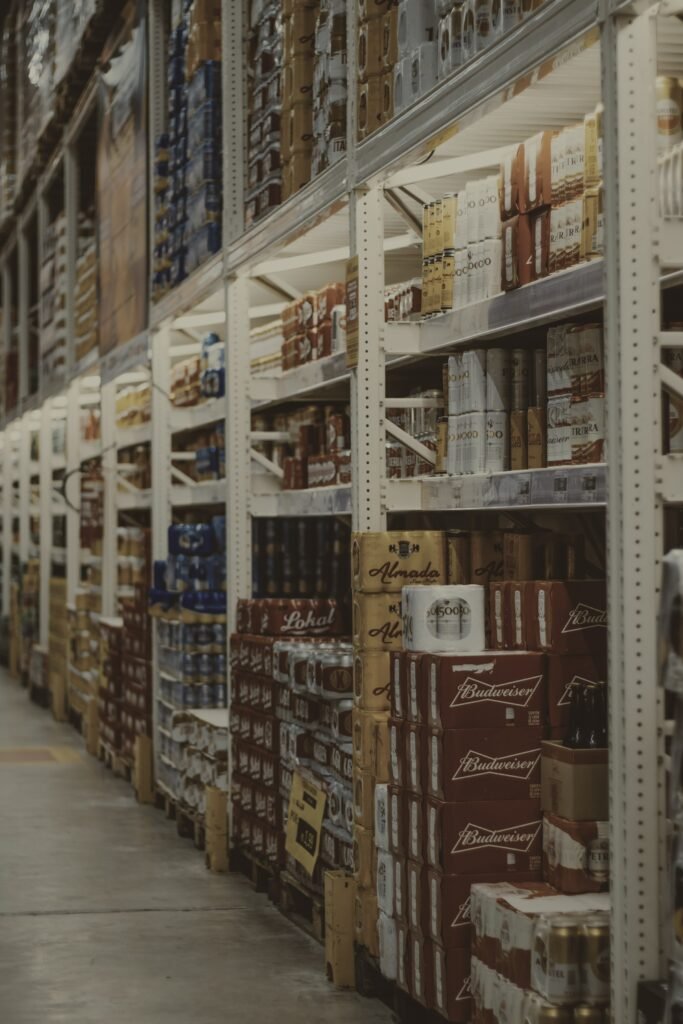 Each requirement below is ready to copy into a specification: specific, measurable, achievable, relevant and time-bound.
- Online service: “The platform shall support 5,000 concurrent users and 200 transactions per second with 95% of responses under 2 seconds, verified by a load test before each major release.”
- Data platform: “The data warehouse shall store 2 TB at go-live and up to 6 TB within 24 months without redesign.”
- Seasonal peak: “The ticketing system shall handle 3 times the average daily volume during the sales opening day, as demonstrated in a rehearsal one month before.”
5. Questions to Ask Stakeholders
- What is the expected number of users, transactions and data volume at launch?
- How fast will these numbers grow over the next one to three years?
- When are the peaks (time of day, month-end, campaigns), and how high are they?
- What should happen when capacity is exceeded: queue, degrade or refuse?
- What headroom does the business want to keep?
- Who reviews capacity forecasts, and how often?
6. Common Pitfalls
- Sizing for the average. Peaks can be several times the average. Size and test for the peak.
- Testing with unrealistic data. An empty database behaves very differently from one with years of data.
- Forgetting downstream systems. A capacity target is useless if the database, network or a partner API cannot follow.
7. Related NFRs
- Scalability — how easily capacity can be raised.
- Performance — capacity is the load at which performance targets still hold.
- Throughput — the processing rate a given capacity supports.
- Volume Testing — verifies behavior with large data volumes.
- Elasticity — adjusts capacity automatically to demand.
8. FAQ
Capacity is the current maximum load; scalability is the ability to increase that maximum by adding resources.
Many teams aim for 20% to 40% unused capacity at the expected peak, depending on how fast they can add more.
With load tests that increase traffic step by step until response time or error rate targets are no longer met.
9. Acronyms, Initialisms & Terms
Acronyms are abbreviations pronounced as words (like NASA); initialisms are spelled out letter by letter (like FBI). The classification below follows common pronunciation.
Acronyms
| Abbreviation | Stands for | Definition | Ref. |
|---|---|---|---|
| ISO | International Organization for Standardization | Independent international body that publishes standards, such as ISO/IEC 25010 for software quality. Its short name comes from the Greek “isos” (equal) and is said as a word. | [4] |
| SMART | Specific, Measurable, Achievable, Relevant, Time-bound | Criteria for writing a goal or requirement so that anyone can check whether it has been met. | [5] |
Initialisms
| Abbreviation | Stands for | Definition | Ref. |
|---|---|---|---|
| API | Application programming interface | Defined way for one program to request data or services from another. | [6] |
| FAQ | Frequently asked questions | List of common questions with their answers. | [7] |
| IEC | International Electrotechnical Commission | International standards body for electrical and electronic technologies; it publishes joint “ISO/IEC” standards with ISO. | [8] |
| NFR | Non-functional requirement | Requirement that describes how well a system must work (its qualities, such as speed or security) rather than what it does. | [1] |
| TB | Terabyte | Unit of data size, about one trillion bytes (1,000 gigabytes). | [9] |
Terms
Plain-language definitions of technical and project-management terms used in this article.
| Term | Plain-language definition | Ref. |
|---|---|---|
| Concurrent users | Users active on the system at the same moment. | [10] |
| Database | Organized store of data that software can query and update. | [11] |
| Incident | Unplanned interruption or degradation of a service. | [12] |
| Load test | Test that simulates the expected number of users or requests to check how the system behaves. | [13] |
| Stakeholder | Person or group with an interest in the system: users, sponsors, operators, regulators. | [14] |
| Throughput | Amount of work a system completes per unit of time, such as requests per second. | [15] |
| Transaction | Unit of work, such as a payment or an order, that must complete fully or not at all. | [16] |
10. Sources and Further Reading
- [1] “Non-functional requirement.” Wikipedia. https://en.wikipedia.org/wiki/Non-functional_requirement (accessed Nov. 18, 2026).
- [2] “ISO/IEC 25010 product quality model.” ISO 25000. https://iso25000.com/index.php/en/iso-25000-standards/iso-25010 (accessed Nov. 18, 2026).
- [3] “Capacity planning.” Wikipedia. https://en.wikipedia.org/wiki/Capacity_planning (accessed Nov. 18, 2026).
- [4] “International Organization for Standardization.” Wikipedia. https://en.wikipedia.org/wiki/International_Organization_for_Standardization (accessed Nov. 19, 2026).
- [5] “SMART criteria.” Wikipedia. https://en.wikipedia.org/wiki/SMART_criteria (accessed Nov. 19, 2026).
- [6] “API.” Wikipedia. https://en.wikipedia.org/wiki/API (accessed Nov. 19, 2026).
- [7] “FAQ.” Wikipedia. https://en.wikipedia.org/wiki/FAQ (accessed Nov. 19, 2026).
- [8] “International Electrotechnical Commission.” Wikipedia. https://en.wikipedia.org/wiki/International_Electrotechnical_Commission (accessed Nov. 19, 2026).
- [9] “Byte.” Wikipedia. https://en.wikipedia.org/wiki/Byte (accessed Nov. 19, 2026).
- [10] “Concurrent computing.” Wikipedia. https://en.wikipedia.org/wiki/Concurrent_computing (accessed Nov. 19, 2026).
- [11] “Database.” Wikipedia. https://en.wikipedia.org/wiki/Database (accessed Nov. 19, 2026).
- [12] “Incident management.” Wikipedia. https://en.wikipedia.org/wiki/Incident_management (accessed Nov. 19, 2026).
- [13] “Load testing.” Wikipedia. https://en.wikipedia.org/wiki/Load_testing (accessed Nov. 19, 2026).
- [14] “Project stakeholder.” Wikipedia. https://en.wikipedia.org/wiki/Project_stakeholder (accessed Nov. 19, 2026).
- [15] “Network throughput.” Wikipedia. https://en.wikipedia.org/wiki/Network_throughput (accessed Nov. 19, 2026).
- [16] “Database transaction.” Wikipedia. https://en.wikipedia.org/wiki/Database_transaction (accessed Nov. 19, 2026).
Written by Philippe Huard · LinkedIn · Last updated: November 18, 2026 · Header photo by @carmendis; inline photo by @eduschadesoares, both on Unsplash.